
Electrician · October 22, 2026 · 4 min read
How Much Does an Electrician Cost Per Hour in 2026?
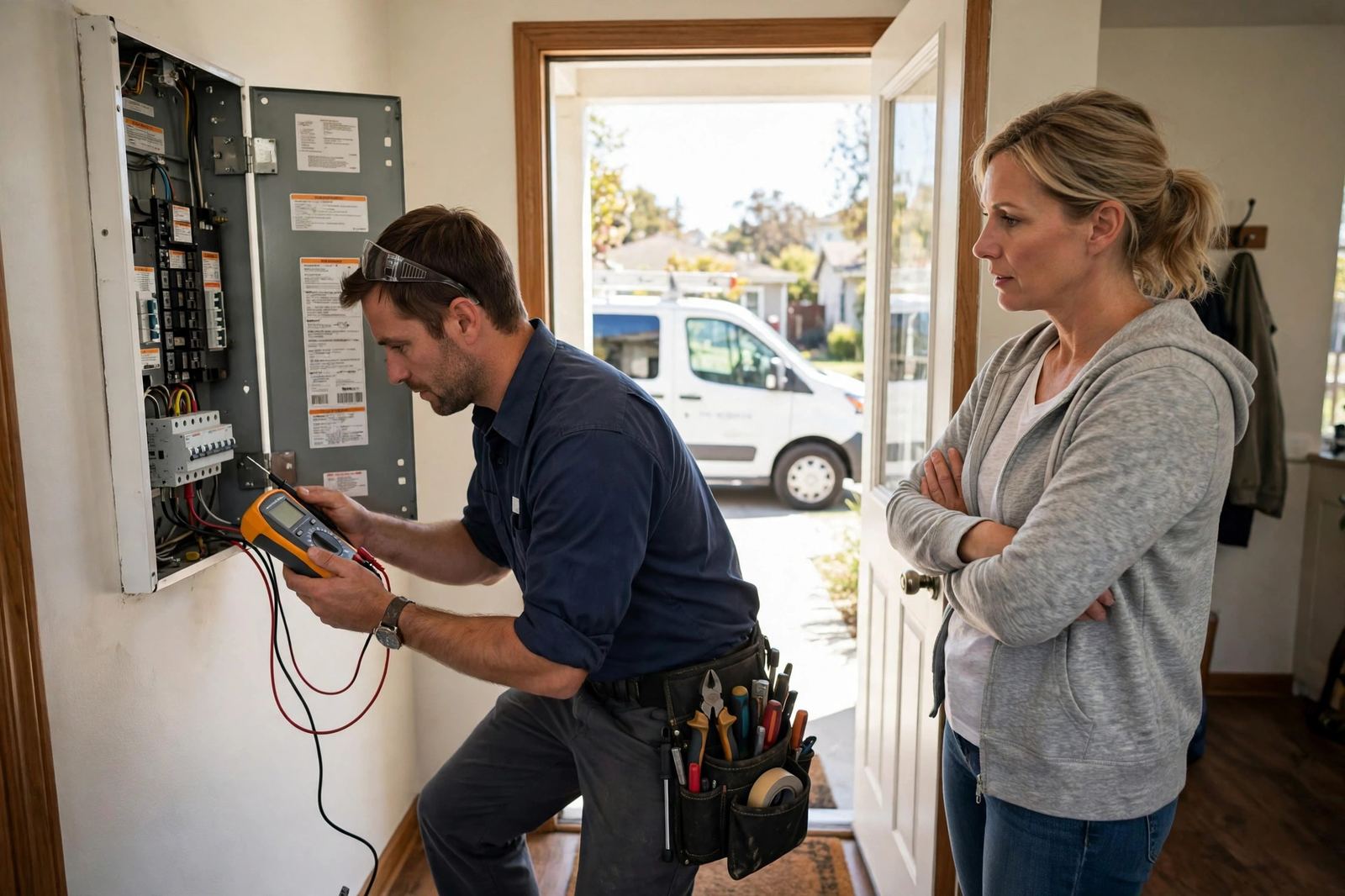
What does an electrician charge per hour by license level?
License level is the first price lever. You pay for training and for who is legally allowed to do the work.
| Who you hire | Typical 2026 hourly rate |
|---|---|
| Apprentice (works under supervision) | $40–$60 |
| Journeyperson (standard licensed electrician) | $60–$90 |
| Master electrician (complex and permit work) | $90–$120 |
5Estimates puts the wider national range at $50–$130 per hour, with master electricians up to $100–$150 — the same picture once high-cost metros are included. For outlets, switches, fans, and fixtures, a journeyperson is usually the right tier. Save the master rate for panel work, rewiring, and jobs that need a permit pulled.
What do common electrical jobs cost as a flat price?
Many electricians quote a flat price for a defined job instead of billing the clock:
| Job | Typical 2026 price |
|---|---|
| Light switch install | $85–$200 |
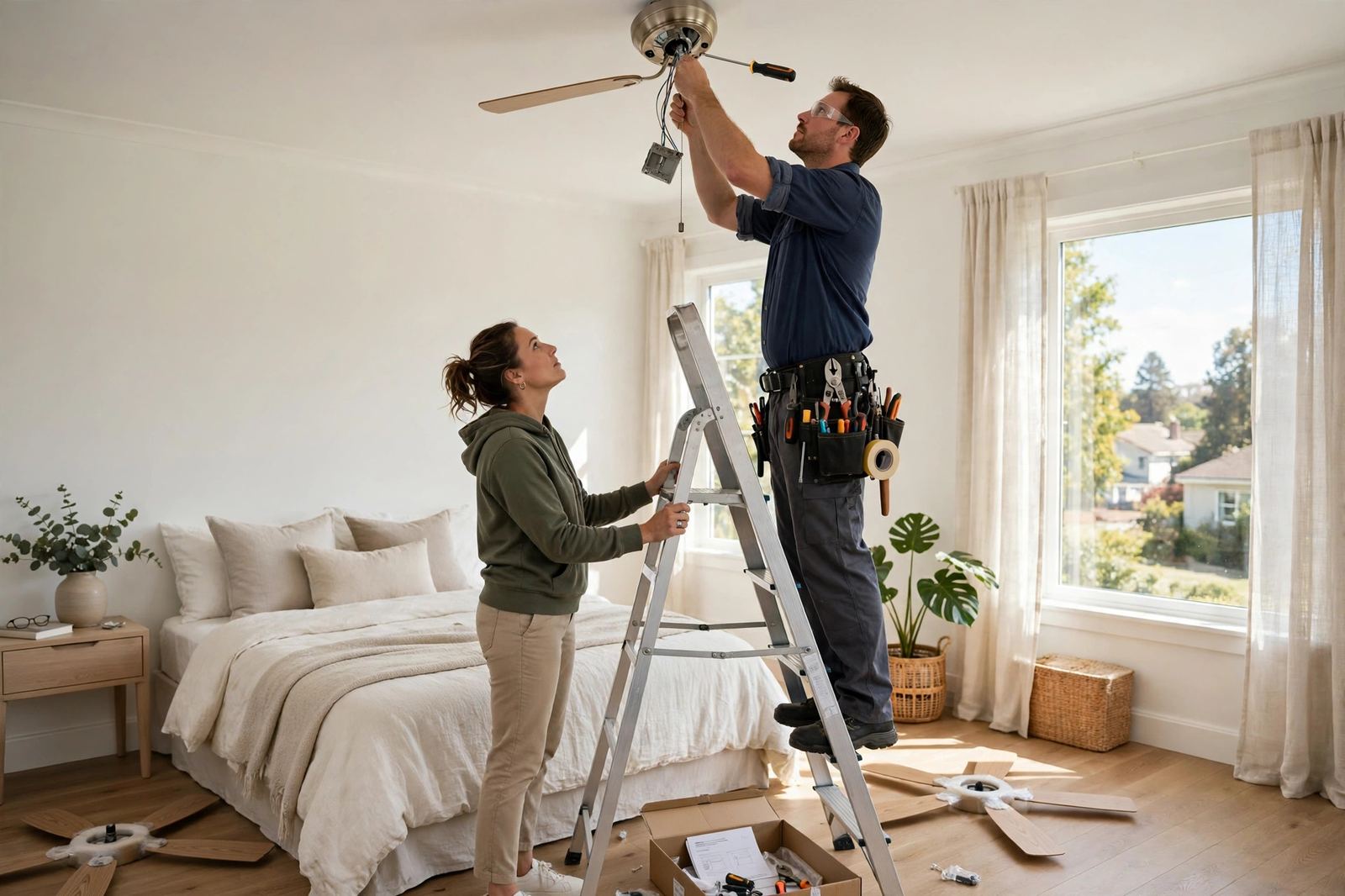
| Ceiling fan install | $140–$350 |
| Outlet install | $200–$300 |
| Breaker box work | $500–$1,800 |
| Electrical panel upgrade | $1,200–$2,000 |
| Rewiring a house | $1,500–$10,000 |
5Estimates lists the same work in the same range — a new outlet at $150–$350, a ceiling fan at $150–$400, and a 100-amp to 200-amp panel upgrade at $1,300–$3,000. Small jobs in total usually run $150–$600.

Why does the first hour cost more than the rest?
Because the first hour is not just labor. A service call fee of $100–$200 covers travel, diagnosis, and setup, and most electricians apply a 1- to 2-hour minimum — Angi notes minimums can run 1 to 4 hours — even when the fix takes 20 minutes. That is why one tiny job looks expensive, and why bundling several small jobs into one visit is the easiest way to pay less: you pay the call fee once, not three times.
What pushes the price up or down?
- Emergency timing. Night and weekend work adds $100–$200, and emergency labor can reach double the standard rate — $100–$250 per hour in the 5Estimates guide.
- Location. Urban electricians typically charge $100 or more per hour, compared with roughly $50 per hour in rural areas, though rural travel fees narrow the gap.
- Permits and inspections. A standard permit runs $75–$150 and a safety inspection $100–$125; permits for rewiring an older home run $200–$900.
- Access and materials. Hard-to-reach panels and wiring in finished walls add labor time, and materials bought by the electrician are typically marked up 10–50%.
What work should never be a DIY or handyman job?
Anything that adds or alters wiring, touches the panel, or needs a permit belongs to a licensed electrician: new circuits, panel upgrades, rewiring, and EV charger circuits. One-for-one swaps — replacing an outlet, switch, or fixture with the same type — usually do not need a permit, but the work still has to be done safely and to code. An unusually low quote is a warning sign, not a bargain: always verify license and insurance before anyone opens your panel.
How do you keep the cost down?
Bundle your small electrical jobs into one visit, clear the area around the panel and label your circuits before the electrician arrives, and buy your own fixtures where the spec is clear. Hire a journeyperson for standard work instead of paying master rates, get at least three quotes for larger jobs, and schedule non-urgent work on a weekday instead of paying the emergency rate.
Wherever you live, enter your ZIP on Van Squads to compare electricians near you — upfront rates and reviews, so you know the likely cost before anyone picks up a tool.
Keep reading
How Much Does a Handyman Cost Per Hour?
Most handymen charge $50–$150 per hour in 2026, with $75–$90 typical. See flat prices for common jobs, why every visit has a minimum, and how to keep the cost down.
Read →
How Much Do You Pay for Regular House Cleaning?
Most homeowners pay $118–$238 per visit for regular house cleaning in 2026, with a $176 average. Prices by schedule and home size, what a regular clean includes, and how to pay less.
Read →For customers
Services that come to you
Skip the phone tag. See verified mobile pros near you — upfront prices, real packages, requests sent in minutes.
Find services →Create a free account to send requests and track appointments.
For business owners
Customers are searching for what you do
List your mobile business on Van Squads free. Show up by ZIP, publish your packages with upfront pricing, and get booking requests straight to your inbox. No listing fees, no commissions — you keep every dollar.
List your business →If you travel to your customers — a van, a car, or your own two feet — you belong here.
Frequently asked questions
How much does an electrician cost per hour in 2026?
$50–$100 per hour for a qualified electrician, with the first hour averaging around $150. Apprentices charge $40–$60, journeypersons $60–$90, and master electricians $90–$120.
What is the average cost to hire an electrician?
$351 in 2026, with most homeowners paying $163–$538. Minor jobs can run as low as $85, and more complex projects can reach $1,150 before you get into panel or rewiring work.
Why is there a service call fee if the job is quick?
The $100–$200 service call covers travel, diagnosis, and the first hour on site. Most electricians also apply a 1- to 2-hour minimum, so a 20-minute fix is still billed as a visit — bundling jobs spreads that fee.
How much does an emergency electrician cost?
Emergency, night, and weekend work adds $100–$200 on top of standard rates, and hourly labor can reach $100–$250 — up to double the standard rate.
Do I need a permit for electrical work?
Usually, yes, if the work adds or alters wiring: new circuits, panel upgrades, rewiring, and EV chargers. A permit runs $75–$150 for most jobs. One-for-one replacements of an outlet, switch, or fixture usually do not need one — your electrician should pull the permit when one is required.